
Learn Crypto Step by Step
Start with crypto basics, then learn coin research, charts, spot trading and risk limits. Lessons use simple Urdu and English, with live examples and time for questions.
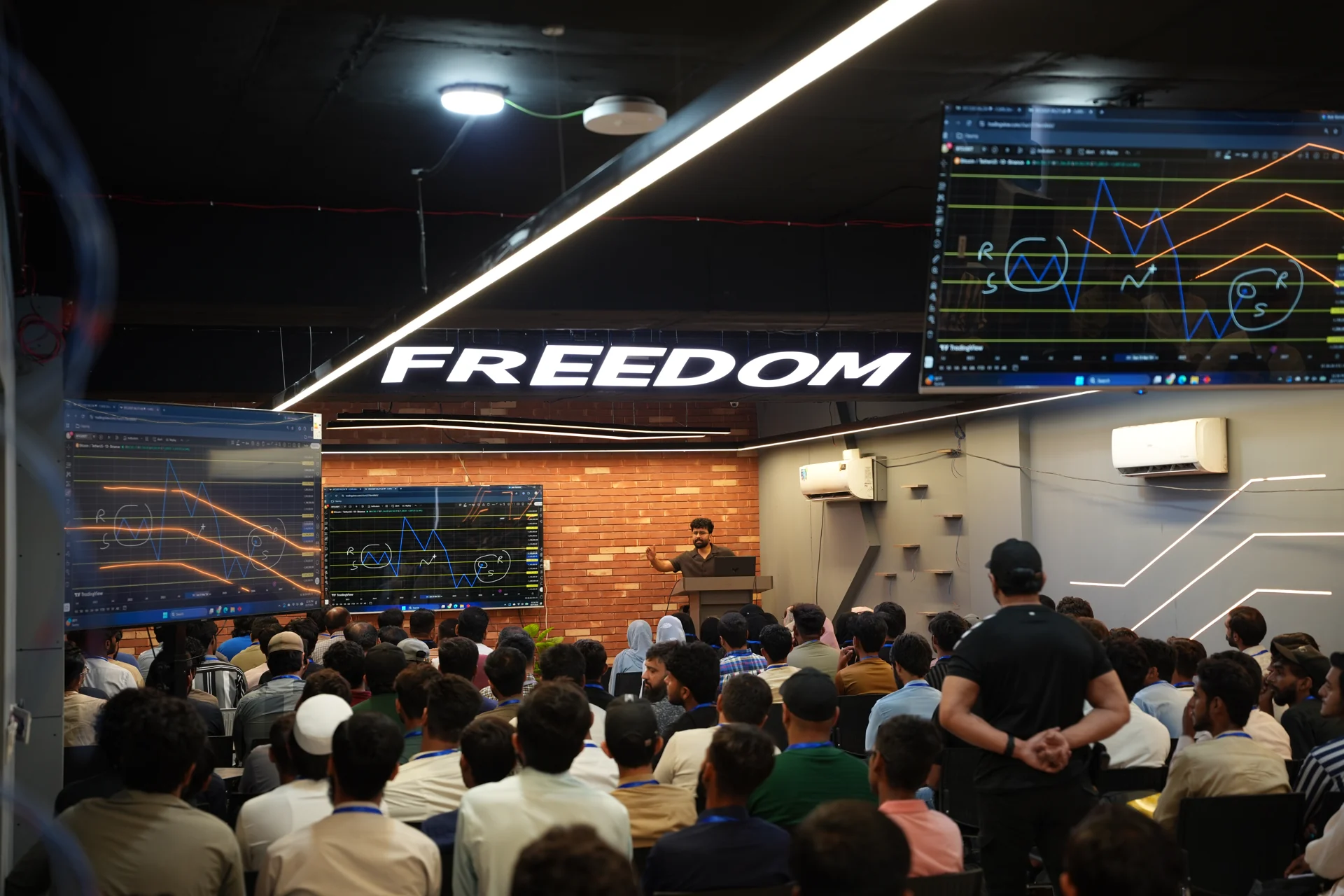
Guessing or Following a Plan
A plan can help you make careful choices. It cannot remove the risk of losing money.
Trading Without a Plan
It is easy to rush when prices move quickly. Learn to slow down and think about your next step.
- Adding too many chart tools without knowing how they work.
- Buying just because the price has gone up.
- Starting a trade without a clear loss limit.
- Risking more money to win back a loss.
Read, Plan, and Review
Start with a clear chart. Work out what you want to do and how much you could lose before you begin.
- Clear Charts: Learn what price movements and buying activity show.
- Price Areas: Find areas where prices have changed before.
- Fast Changes: Understand why prices can move quickly.
- Loss Limits: Check the possible loss before each trade.
What you will learn.
From the first step.
Start with simple ideas. Then practise research, charts and careful decisions. Open any topic to see the lessons inside.
01Start with crypto and blockchainUnderstand what you are learning before you place a trade.
- What a cryptocurrency is, and how it differs from ordinary money.
- How blockchain keeps a shared record of transactions.
- Compare crypto with other markets, including its costs and risks.
02Use an exchange and understand feesLearn how a platform lets you buy and sell coins.
- Compare exchanges and learn what to check before choosing one.
- Understand buying, selling and platform fees.
- Compare costs before placing a trade. No exchange is free of risk.
03Read a price chartUse TradingView, a chart tool, to understand how prices move.
- Read candles, price patterns and trends that move up, down or sideways.
- Find support and resistance: areas where a price may pause or change direction.
- Use trendlines, Fibonacci levels and volume, which shows how much was traded.
- Compare daily and shorter charts. Study momentum, or how strongly a price is moving.
04Plan when to enter and leave a tradeLook for reasons to act, and decide when your idea no longer makes sense.
- Study buying and selling areas, also called demand and supply zones.
- Learn chart ideas called Smart Money Concepts (SMC), Fair Value Gaps (FVG) and Break of Structure (BOS). Open the word guide below for simple meanings.
- Study signs of activity from large traders. These signs cannot tell you their next move for certain.
- Use a simple checklist before a trade, even when you are following an easy setup.
05Understand news and market moodLearn how news, fear and excitement can affect decisions.
- Read market news and discuss how it may affect prices.
- Compare activity from large traders and smaller buyers and sellers.
- Study fear, greed and rising-market cycles. Learn why nobody can promise when the next rise will start.
06Look at the wider crypto marketCheck more than one coin before making a decision.
- Understand Bitcoin dominance: Bitcoin's share of the total crypto market value.
- Look at signs of money moving into or out of the market.
- Use this wider view alongside your chart, rather than relying on one signal.
07Research a coin before buyingLearn what a project does and who is behind it.
- Check a coin's purpose, project team and available information.
- Compare different coin types, including stablecoins, which aim to follow another asset's value.
- Consider the project's activities when checking whether it fits your ethical and religious requirements.
08Practise spot trading and growth planningSpot trading means buying and selling the actual coin.
- Compare short trades, called scalping, with trades held for longer.
- Plan entries, exits and when to take a profit or accept a loss.
- Understand compounding: putting some gains back into a plan. Losses can also reduce your money.
- Practise a clear process. Daily income and doubling your money are not promised.
09Plan a portfolio and limit riskA portfolio is the collection of assets you hold.
- Plan how to start with a small amount and what you can afford to lose.
- Learn diversification: spreading money across assets instead of relying on one.
- Learn position sizing: deciding how much to use in a single trade.
10Build calm and steady trading habitsLearn how your feelings can affect your choices.
- Recognise fear, greed, anger and overconfidence.
- Practise patience and follow a routine instead of chasing a quick gain.
- Review mistakes and build discipline over time.
11Learn through live examplesWatch, ask questions and explain your own ideas.
- Follow live chart breakdowns, including weekend sessions in the outline.
- Watch trade examples with explanations of the decisions and risks.
- Review past trades and ask questions in feedback sessions.
- Confirm the current batch's days and times before joining.
12Understand halal and ethical trading principlesLearn the principles behind the mentorship's ethical approach.
- Discuss what may make a trading activity halal or haram.
- Learn why deals that charge interest and trades based only on guesses need care.
- Consider transparency, ownership and a project's real purpose.
- The mentorship does not certify every coin or trade as halal. Seek qualified guidance for a personal religious ruling.
A small word guide
You do not need to know these words before joining. Your teacher will explain them with examples.
Smart Money Concepts (SMC)
A group of chart methods used to study price movement and possible activity from large traders. They do not reveal anyone's private orders.
Fair Value Gap (FVG)
A chart pattern left by a fast price move. Traders may watch this area again, but a price does not have to return to it.
Break of Structure (BOS)
When a price passes an earlier high or low that a trader is watching. It is a clue to study, not a promise about the next move.
Fibonacci levels
Percentage lines drawn on a chart to mark areas a trader may watch. The lines do not guarantee where a price will turn.
Ready to Start Learning?
Learn in Lahore or join live on Google Meet. Ask our team about the next class.